Window tinting is no longer limited to cars, it has become an essential solution for both homes and commercial spaces.
If your space feels too hot, your energy bills are rising, or your interiors are fading due to sunlight, window tinting might be the solution you’ve been looking for.
Today, both homeowners and businesses are choosing window tinting to reduce heat, improve privacy, and lower energy costs while enhancing comfort and aesthetics.
In this guide, we’ll break down what window tinting is, how it works, its benefits, costs, and how to choose the right solution for your property.
What Is Window Tinting?
Window tinting is the process of applying a thin, multi-layered film to glass surfaces to control sunlight, heat, UV rays, and visibility. These films enhance glass performance without altering its structure and are available in different performance grades for residential and commercial use.
Types of Window Tinting Films
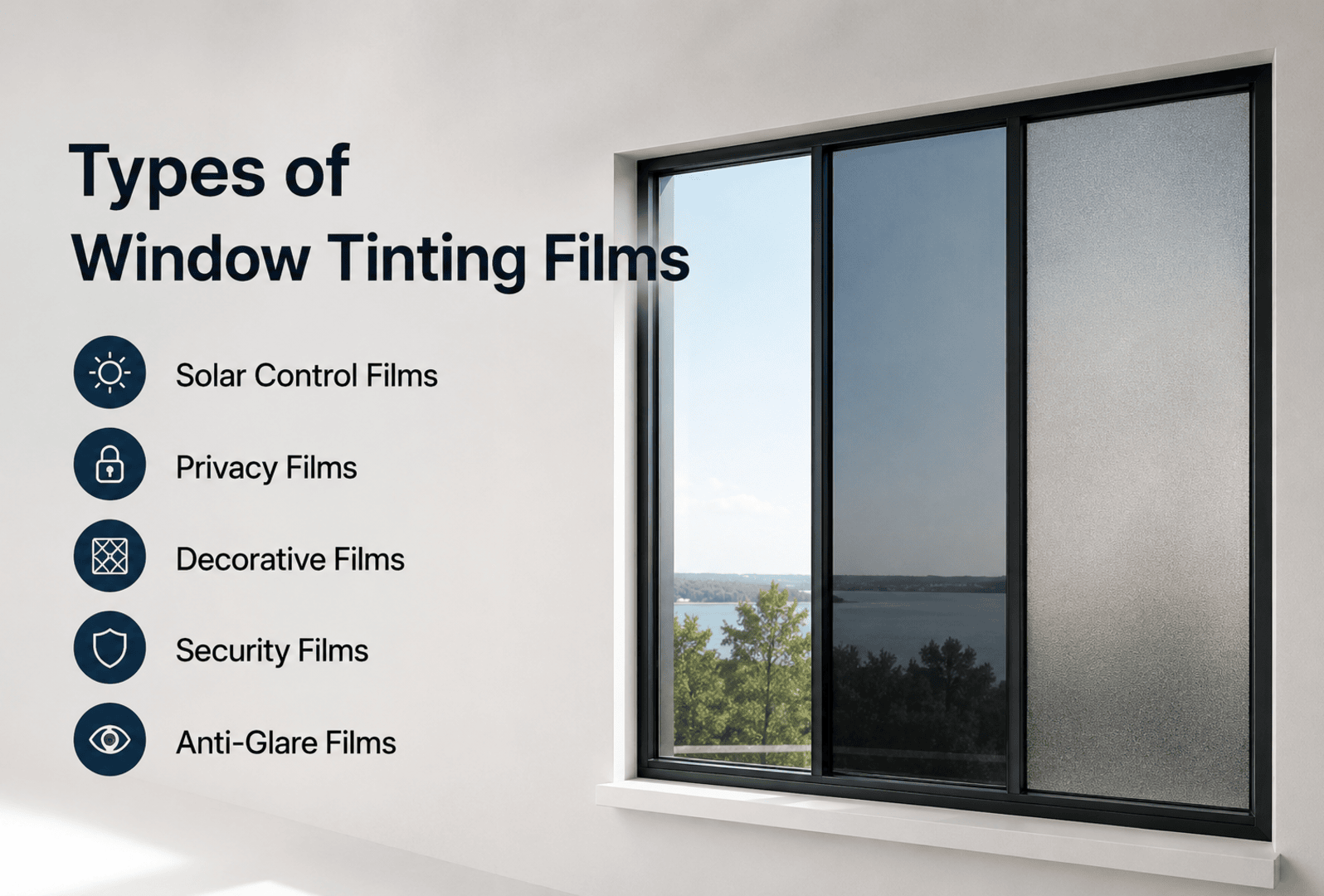
Film Type |
Details |
| Solar Control Films | Reduce heat and improve energy efficiency |
| Privacy Films | Low, medium, or high privacy options |
| Decorative Films | Aesthetic enhancement with light control |
| Security Films | Strengthen glass and reduce shatter risk |
| Anti-Glare Films | Reduce screen glare and eye strain |
Residential vs Commercial Window Tinting
While the core technology of window tinting remains the same, its applications and objectives differ significantly between residential and commercial properties.
Residential Window Tinting
Residential tinting focuses on improving everyday living comfort while maintaining aesthetics.
Key Benefits:
- Reduces indoor heat and cooling costs
- Blocks up to 99% of harmful UV rays
- Minimizes glare for screens
- Enhances privacy without blocking light
- Protects interiors from fading
Best Suited For:
Homes, apartments, villas, living rooms, bedrooms, glass doors
Commercial Window Tinting
Commercial tinting is more performance-driven, focusing on energy efficiency, productivity, and long-term cost savings.
Key Benefits:
- Reduces energy costs for large glass areas
- Improves employee comfort & productivity
- Enhances privacy in offices
- Adds security with safety films
- Creates a modern building appearance
Best Suited For:
Offices, showrooms, hospitals, malls, commercial buildings
Residential vs Commercial Window Tinting – Key Comparison
| Feature | Residential | Commercial |
| Primary Goal | Living comfort | Business efficiency |
| Film Type | Aesthetic-focused films | High-performance films |
| Coverage Area | Homes & small spaces | Large buildings |
| Focus | Lifestyle improvement | Energy & cost optimization |
| Customization | Design & privacy | Performance & compliance |
How Does Window Tinting Work?
Window tinting works by controlling how sunlight interacts with glass using advanced film technology.
Key Working Mechanisms:
- Heat Rejection
Films reflect and absorb solar energy, reducing indoor heat. - UV Protection
Blocks up to 99% of UV rays, protecting furniture, flooring, electronics, and skin. - Glare Reduction
Minimizes glare for better comfort, visibility, and improved performance. - Insulation Effect
Helps regulate indoor temperature, cooler in summer and warmer in winter. - Privacy Control
Allows natural light while limiting outside visibility
Does Window Tinting Affect Natural Light?
- Allows natural light to enter
- Reduces glare without darkening interiors
- Maintains brightness while improving comfort
- Different tint levels are available based on privacy and lighting preferences
Best Areas for Window Tinting & Their Benefits
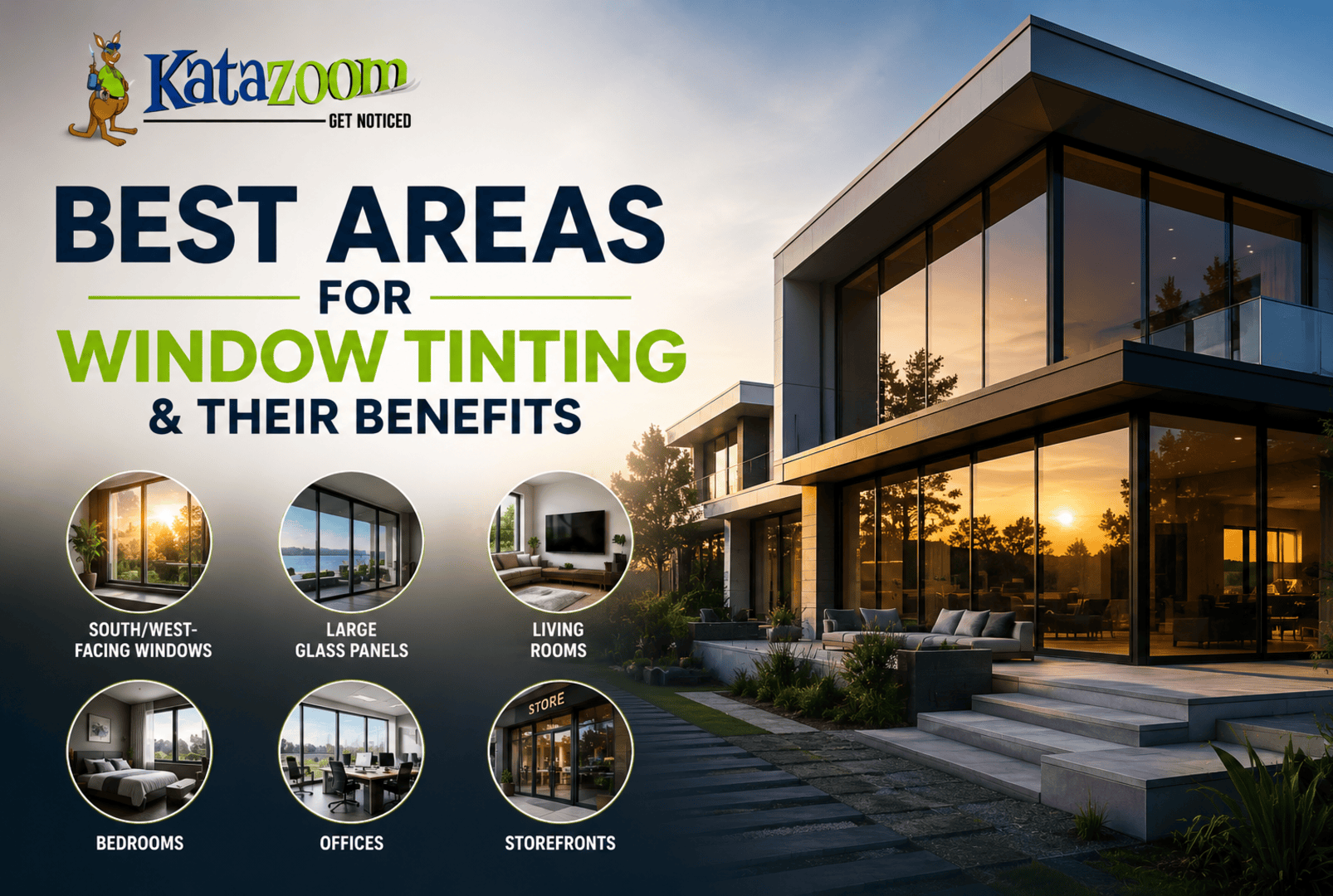
- South/West-facing windows: Reduce excess heat and lower indoor temperature
- Large glass panels: Minimize glare and improve overall comfort
- Living rooms: Reduce screen glare for a better viewing experience
- Bedrooms: Enhance privacy without blocking natural light
- Offices: Reduce eye strain and improve productivity
- Storefronts: Block UV rays and protect products from fading
How to Choose the Right Window Tinting Film
Choosing the right window film depends on your specific needs, environment, and budget. Not all films serve the same purpose, so selecting the correct type is essential for maximum performance.
Key Factors to Consider:
- Purpose: Heat reduction, privacy, security, or aesthetics
- Window direction: High sun exposure areas need stronger films
- Property type: Residential vs commercial requirements
- Natural light preference
- Budget and long-term durability
Pro Tip: A professional consultation ensures the best performance and long-term results.
Cost of Window Tinting
The cost of window tinting depends on film type, project size, glass area, and installation requirements. Residential and commercial pricing varies based on performance level and application complexity.
Window tinting also improves energy efficiency by reducing heat gain, which helps lower cooling costs and maintain a more consistent indoor temperature.
Window Tinting – Pricing Overview
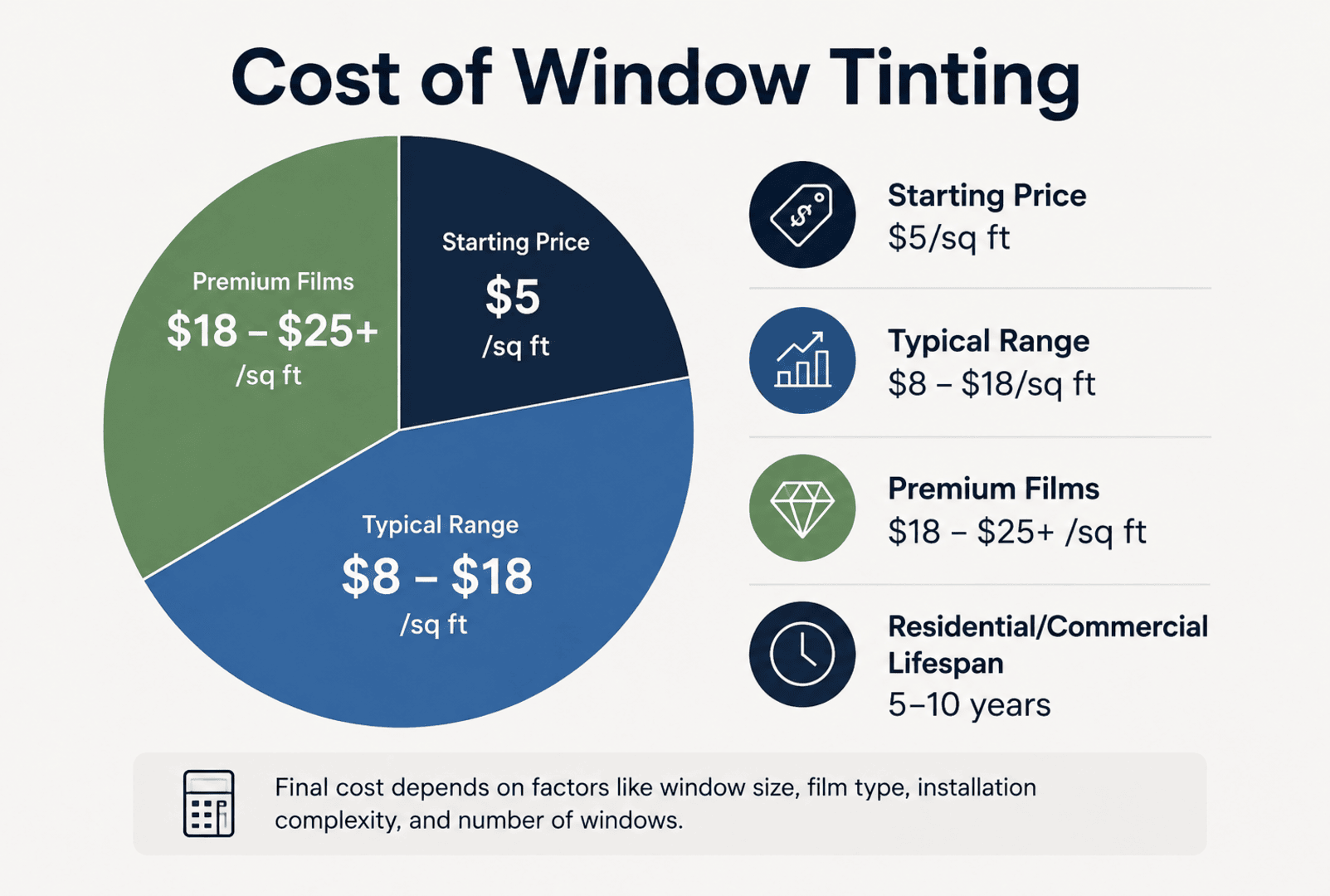
- Starting Price: $5/sq ft
- Typical Range: $8 – $18/sq ft
- Premium Films: $18 – $25+ /sq ft
- Residential/Commercial Lifespan: 5–10 years (based on film quality & exposure)
Factors Affecting Lifespan: Sun exposure, Film quality, Installation quality, Maintenance.
Final pricing may vary based on glass type, project size, and selected film performance grade.
Residential / Commercial Tint – Service Overview
| Feature | Details |
| Film Types | Solar Control, Privacy, Decorative, Security, Anti-Glare |
| Heat Reduction | Significant heat reduction depending on selected film |
| UV Protection | Up to 99% |
| Privacy Levels | Low / Medium / High |
| Energy Efficiency | Helps reduce cooling costs and improve insulation |
| Installation | On-site professional installation (minimal disruption) |
| Turnaround Time | Survey and installation timelines vary based on project size and requirements. |
| Warranty | 1-year installation warranty + film manufacturer warranty (as per product specifications) |
| Best For | Homes, offices, retail spaces, commercial buildings |
Factors Affecting Cost
- Window Size: Larger windows require more material and increase overall cost
- Film Type: Solar control, privacy, decorative, security, and anti-glare films impact pricing based on performance level
- Building Type: Residential projects are generally lower cost, while commercial installations are higher due to scale and complexity
- Installation Complexity: Difficult access, large glass areas, or custom work increases labor and installation cost
How Much Can You Save with Window Tinting?
One of the key reasons people invest in window tinting is its impact on energy efficiency and long-term cost savings.
Estimated Savings Benefits:
- Reduced cooling costs during summer
- Lower dependency on air conditioning
- Improved energy efficiency for large commercial spaces
Over time, these savings can significantly offset the initial installation cost, making window tinting a cost-effective long-term investment
Is Window Tinting Worth It?
Yes. Both residential and commercial window tinting offer strong long-term ROI because it is a one-time installation that delivers continuous benefits.
ROI Benefits of Window Tinting
- Energy savings: Lower electricity bills
- Comfort: Better indoor temperature control
- Protection: Prevents fading of interiors and furnishings
- Privacy: Improved security and visual comfort
Overall, window tinting delivers long-term value through reduced energy costs, improved comfort, and extended protection of interiors.
Take a look at our recent projects to see our work in action.
Window Tinting Installation, Timeline & Maintenance
Step 1: Surface Preparation
Glass is cleaned thoroughly to remove dust, grease, and residues before installation .
Step 2: Film Measurement & Cutting
The window film is carefully measured and cut according to the glass dimensions.
Step 3: Film Application
A professional application solution is used to install the film smoothly and minimize bubbles or imperfections.
Step 4: Alignment & Finishing
Edges are carefully aligned and trimmed to create a clean, seamless finish.
Step 5: Drying & Curing
The film requires a few days to fully cure and properly bond with the glass surface.
How Long Does Installation Take?
Installation timelines vary depending on the size, glass area, and complexity of the project.
Additional Considerations:
- On-site professional installation with minimal disruption
- No major structural changes required
- Drying and curing times may vary depending on film type and environmental conditions
Maintenance Tips for Window Tinting
To ensure long-lasting performance and durability, proper maintenance is important:
- Clean with mild, non-abrasive solutions
- Avoid sharp objects on film
- Use soft cloths or microfiber
- Avoid cleaning for a few days after installation
Legal Considerations:
Window tinting for buildings is generally allowed in most regions. However, certain restrictions may apply depending on:
- Reflectivity levels
- Visibility standards
- Local building regulations
It’s always recommended to check local guidelines or consult a professional before installation.
Safety, Myths & Misconceptions
Safety Benefits
- Completely safe when professionally installed
- Strengthens glass
- Reduces risk of shattering
- Holds broken glass together on impact
Myths :
- “It makes rooms too dark” → Modern films allow natural light
- “It damages glass” → Professional installation is safe
- “Only for offices” → Widely used in homes
What to Know Before Installing Window Tinting
Before choosing a window tinting service, it’s important to understand both technical and legal aspects to make an informed decision.
Key Questions to Ask Your Installer:
- What type of film is best suited for my needs?
- What level of heat and UV protection will I get?
- Will the film affect visibility or aesthetics?
- What warranty is included (installation and manufacturer)?
- How long will the installation process take?
- What maintenance or care is required after installation?
Why Choose Professional Window Tinting Over DIY?
While DIY kits are available, professional Window Tinting Company offers:
- Bubble-free application
- Proper alignment and finishing
- High-quality materials
- Warranty and durability
- Long-term performance
Poor installation can reduce effectiveness and lifespan.
How to get started:
- Schedule a site inspection
- Get film recommendations based on your needs
- Receive a customized quote
- Choose installation timeline
- Professional installation
Final Thoughts
Commercial and residential window tinting is more than just a visual upgrade, it’s a functional solution that improves comfort, efficiency, and protection.
By controlling heat, light, and privacy, window tinting transforms ordinary glass into a high-performance feature for both homes and businesses.